
Keeping the right spring tension is key for your garage door‘s smooth operation and safety. The springs help make opening and closing the door easy by balancing its weight. The right tension means the door works well and keeps accidents away.
It’s important to check your garage door springs‘ tension to avoid dangers and make your door last longer. Knowing how to adjust the tension keeps your home safe and secure.
Key Takeaways
- Proper spring tension is vital for safe garage door use.
- Checking spring tension stops accidents and extends the door’s life.
- Knowing how to adjust tension is key for homeowners.
- Regular upkeep keeps your home safe and secure.
- DIY adjustments are possible with the right knowledge and care.
Understanding Garage Door Springs
Knowing how garage door springs work is key to keeping your garage door safe and working right. These springs are very tight, which helps them lift the door easily.
Types of Garage Door Springs
There are mainly two kinds of garage door springs: torsion springs and extension springs. Torsion springs sit above the door and twist to store energy. On the other hand, extension springs are on the sides and stretch to lift the door.
- Torsion springs are strong and used in heavy doors.
- Extension springs are found in older systems and cost less than torsion springs.
Importance of Proper Tension
Having the right tension in garage door springs is vital for smooth door operation. If they’re too loose, the door might not open fully or could fall. This could damage the door or hurt someone.
If they’re too tight, they could break, which is also dangerous.
“The tension in garage door springs directly affects the balance and functionality of the garage door, making regular maintenance essential.”
Keeping the tension right helps avoid issues like uneven door movement or loud noises. Regular garage door spring maintenance tips include looking for wear and making sure they’re adjusted right.
Signs of Incorrect Garage Door Spring Tension
Knowing the signs of wrong garage door spring tension is key for homeowners. It helps avoid accidents and keeps the garage door working well. If the tension is off, it can show in different ways, affecting how the door works and its safety.
Door Movement Issues
One clear sign of wrong spring tension is if the door moves oddly. If the springs are too loose or tight, the door might not move right. Common problems include:
- The door won’t open or close right
- There are gaps or the door is not even when it’s moving
- The door slams shut or opens too fast
These issues are not just annoying. They can also lead to bigger problems if not fixed quickly.

Noise Indicators
Strange noises are another big sign of wrong spring tension. Grinding, squeaking, or banging sounds mean the springs might be too stressed or old. These sounds are not just annoying. They can also be a safety risk.
A spring that’s too tight can break, causing harm or damage. It’s important to find out why these noises happen and adjust the spring tension to avoid more problems.
By spotting these signs early and acting fast, homeowners can avoid expensive fixes later. They can also make sure their garage door works well and safely.
Tools Needed for Checking Spring Tension
Checking garage door spring tension needs more than just a keen eye. It requires the right tools. Having the right equipment makes the process smoother and safer.
Recommended Tools
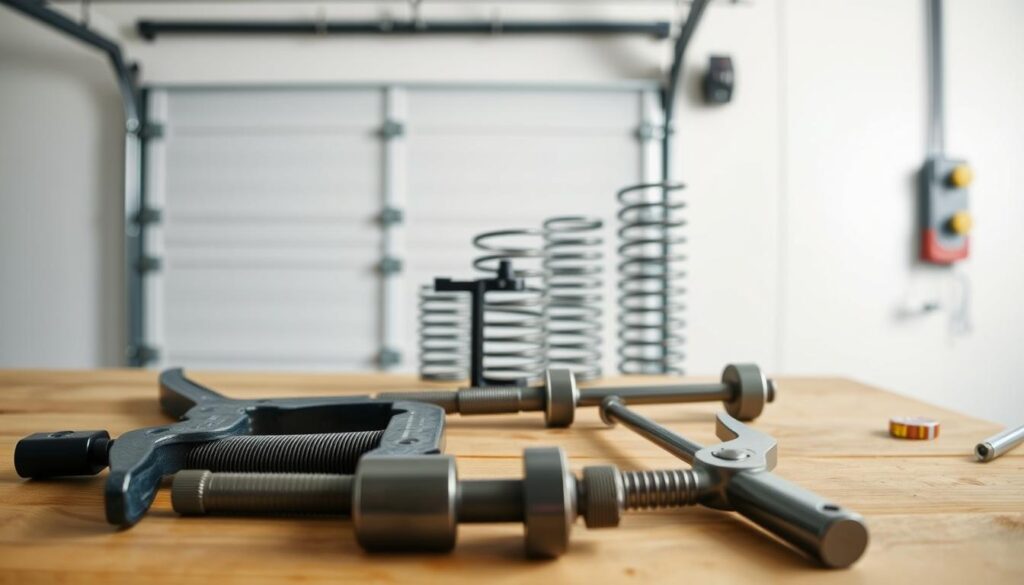
To check and adjust your garage door spring tension, you’ll need these tools:
- Winding bars: These are key for adjusting the tension in your garage door springs.
- A 7/16 inch wrench: This is used for loosening or tightening the nuts that hold the spring in place.
- Vise grips: Useful for holding parts in place while you work on them.
Safety Gear Essentials
Safety is always the top priority when working with garage door springs. Here are some essential safety gear items:
- Safety glasses: Protect your eyes from debris or spring parts that might fly off during the adjustment.
- Gloves: Heavy-duty gloves can protect your hands from cuts and abrasions.
- A sturdy ladder: Make sure it’s stable and consider having someone to hold it for you, if possible.
By having the right tools and safety gear, you’ll be ready to check and adjust your garage door spring tension safely and effectively.
Step-by-Step Guide to Checking Spring Tension
Knowing how to check garage door spring tension is key for keeping your door working well. Regular checks can stop accidents and make sure the door moves smoothly.
Preparing Your Garage Door
First, get your garage door ready. Unplug the opener to avoid any sudden movements. Then, lift the door to waist height and hold it with clamps or have someone assist. This is important for safety and to get accurate readings.
Tension Testing Process
To test the spring tension, see if the door balances. A balanced door stays put when you let it go halfway open. If it moves, the tension needs adjusting. For torsion springs, look at the set screws on the torsion tube. For extension springs, check for wear or damage.
Final Adjustments and Safety Checks
After testing, make any needed adjustments. For torsion springs, turn the torsion tube with a wrench. For extension springs, add or remove clips. Always check the door’s balance and smooth operation after adjusting. Wear gloves and safety glasses when working with springs because of their high tension.
Checking and adjusting your garage door spring tension often is a simple way to keep it safe and working right. By following these steps, your garage door will last for many years.
When to Seek Professional Help
While you can adjust garage door spring tension yourself, there are times when you need a pro. If you’re not sure about the tension or feel uneasy making changes, it’s time to call a professional.
Risks Indicating the Need for an Expert
Notice any wear or damage on springs, cables, or hardware? Or is your door making odd noises? If so, it’s best to get professional garage door spring services. A broken spring can be dangerous, so don’t wait if you’re unsure.
Selecting a Qualified Technician
When picking a technician for garage door spring repair, look for experience and proper certification. Check online reviews and ask for referrals to find a reliable professional. A skilled technician will find the problem and fix it safely and effectively.
